
NERC CIP
Electric grid requirements
Scope applicable requirements for the bulk electric system, including access boundaries, change management, and supplier risk.
FERC · Grid securitySecurity Critical infrastructure. Clear boundaries.
We define data, access, and operating boundaries with your security team—before an AI workflow connects to your systems.
Explore our approachRequirements before deployment
Starting with energy and utilities, we map the requirements that apply to the entity, systems, data, and workflow in scope.
Electric grid requirements
Scope applicable requirements for the bulk electric system, including access boundaries, change management, and supplier risk.
FERC · Grid securityOperational technology
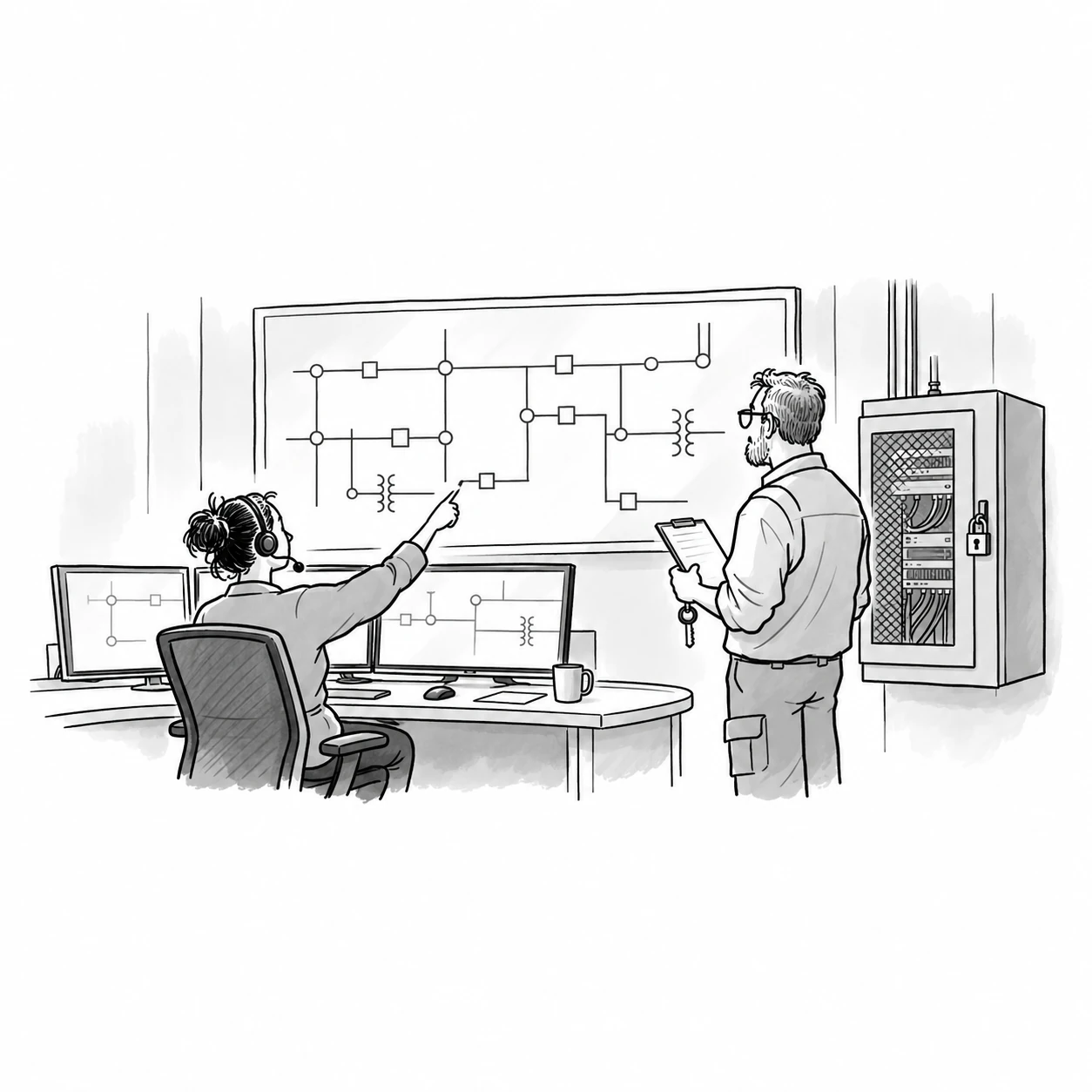
Use OT security guidance to define network separation, approved access paths, and the boundary between AI and operational control.
NIST · OT securitySensitive infrastructure records
Identify protected information and agree permitted recipients, handling rules, storage, and disclosure controls where CEII rules apply.
FERC · CEIIEnterprise assurance
Agree the supplier evidence procurement requires. Review certificates and reports for the actual services and environment in scope.
ISO · Information securityAccountable AI
Define responsible owners, evaluate workflow risks, establish human review, and retest material changes before release.
NIST · AI risk managementThese are requirements and frameworks used to scope an engagement. Applicability varies; their inclusion is not a claim that Corvana holds a certification or that every workflow falls under the same rules.
Classify the records a workflow needs. Use approved, representative, or redacted material during discovery and agree the handling requirements before sensitive data is introduced.
Define approved storage locations, processing regions, subprocessors, retention periods, and deletion responsibilities with your security and procurement teams.
Review provider terms and settings for training, logging, retention, and secondary use. Agree any restrictions and exceptions before connecting your data.
Design least-privilege access around named users, service identities, and the task. Agree SSO, MFA, access review, and revocation requirements for the delivery environment.
Separate the sandbox from live operations. Define permitted actions and human approval gates; any connection to operational technology requires its own scope and authorization.
Agree release approvals, logging, rollback, incident contacts, and notification obligations. Include the evidence and security testing your environment requires.
Preserve the source records, versions, workflow actions, and approval decisions needed to examine an outcome. Document uncertainty and route exceptions to the right person.
Test agreed quality and security criteria before release. Recheck permissions, sensitive-data handling, and behavior when context, models, tools, or workflows change.
Your data. Your decisions.
Each engagement starts with a shared set of requirements
for the environment and the people working in it.
Agree where records live, how long they are kept, and how they are returned or deleted.
Define who can see the context, run the workflow, approve an action, and revoke access.
Specify encryption in transit and at rest, key ownership, and the evidence needed to verify it.
Approve model providers and document training restrictions, logging, and processing terms.
Human authority, by design
Define what can happen automatically, what requires review,
and what must remain outside the agent’s permissions.
Corvana does not currently claim an ISO 27001 certification or a SOC 2 report. We scope the assurance evidence your procurement team requires and review supplier certificates and reports for the services, environment, and period they cover.
No. Applicability depends on the responsible entity, systems, information, and requirements involved. We define the applicable boundary with your compliance and security teams before designing the workflow.
We agree permitted use before connecting data, including any restrictions on model training and secondary use. We review the provider, service settings, retention, and contract terms against those requirements with your team.
Each engagement defines the permitted systems, identities, tools, and actions. Any connection to operational technology requires a separate review with the operator, covering safety, reliability, network boundaries, and human authorization.
We document the requirements for your chosen delivery environment: identity, encryption, key management, processing locations, and subprocessors. Your security team agrees the evidence and approvals needed before deployment.
We agree the handover at the start: deliverables and records to return, access to revoke, and retention obligations. The plan also defines how remaining copies and backups are handled and what deletion evidence is needed.
Talk to Corvana about the requirements
behind your next AI workflow.
Work together
Tell us what your team is working on.
We’ll help you find a place to start.